


Understanding Different Bike Engine Types and Their Benefits
- Posted: 20th, Feb 2026
- Updated on: 20th, Feb 2026
- Category: Finance
- Written by: Shriram finance

 751
751 13 Min
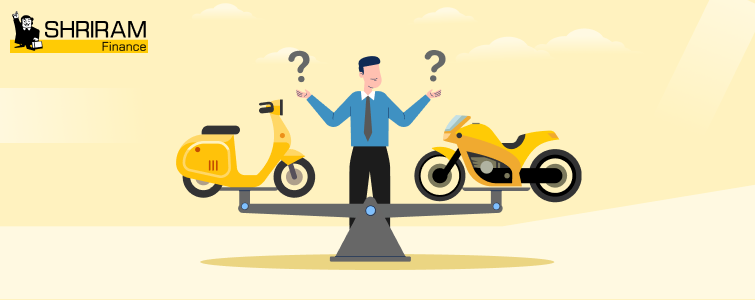
Motorcycle engines have changed a great deal over the years. In India and across the world, what started as simple machines has now become a wide range of engine types. These changes are not just about power. They reflect how technology has grown and how riders’ needs have evolved. From daily commuting to long-distance touring, different bikes now serve different purposes.
Knowing the different motorcycle engine types is important. Not every engine is intended for the same purpose. While some prioritise speed or smoothness, others provide greater fuel efficiency. The bike's handling, feel, and sound are also influenced by the engine type. Making better decisions can result from understanding how engines operate. It assists you in selecting a bike that meets your riding objectives, be they performance, leisure, or city use.
The range of options available in the rapidly growing Indian two-wheeler market may appear confusing. Bikes with single-cylinder, parallel-twin, V-twin, and even electric motors are now available from various brands. Each has advantages and disadvantages. What works for a beginner might not be ideal for an experienced rider. That is why you should keep in mind about differences.
This article will break down the different motorcycle engine types in simple terms. It will cover how they work, what they offer, and when they’re best used. You’ll also learn how engine type affects comfort, mileage, and maintenance. By the end, you’ll have a clear view of which engine type suits your needs the most
What is a Bike Engine?
An engine in a motorcycle can be referred to as the vehicle's heart. It provides the propelling force in a bike from fuel to performance. Pressing a starter or a kick lever gets everything started and the engine begins its activity to drive the wheels. That is how a bike goes straight ahead.
To work, the engine makes a number of tiny explosions in long metallic tubes called cylinders. The tiny explosions occur in each cylinder and the explosion drives the piston up and down rapidly when the air fuel mixture burns. This mechanism turns a rod called a crankshaft, which powers the wheels. The entire process cycles several times every second when the bike is running.
The other important parts in the engine include the fuel system, which governs the way petrol or air-fuelling mix goes into the engine, and the cooling system-air or liquid, which prevents the engine from overheating.
There are many bike engine types, and each type affects the ride in different ways. A single-cylinder engine really simplifies things and is mostly suited for daily usage. It provides nice fuel economy but feels a bit less smooth while running at a higher speed. A twin-cylinder engine is much better with power and balance. Multi-cylinder engines like inline-three or inline-four engines provide huge performance and are commonly used in sports bikes.
Understanding engine type also helps you know what to expect from a ride. Some engines are made for fuel efficiency. Others focus on power or long-distance comfort. These are some of the key motorcycle engine benefits you’ll learn to compare when choosing your next bike.
Key Engine Specifications Explained
When comparing motorcycles, engine specifications play a big role. They tell you how the bike might feel to ride—its speed, strength, and fuel use. Here are some of the most important terms you’ll often see:
Displacement (cc):
This tells you the engine size. Measured in cubic centimetres (cc), it refers to the total volume of all cylinders. Although more power is typically associated with a higher cc, fuel consumption may also increase. For daily city rides, smaller engines, such as 100–125 cc, are ideal. Larger engines, like 350 or 500cc, are better suited for highway or touring driving.
Power (bhp):
BHP stands for brake horsepower. It shows how much actual power the engine sends to the wheels. More bhp means better speed and quicker acceleration. It’s an important number if you like fast rides or need extra push during overtakes.
Torque (Nm):
Torque is the pulling force the engine creates. It’s measured in Newton-metres (Nm). Bikes with higher torque are better for climbing hills or carrying weight. You also feel better low-end pull in city traffic.
Revolutions Per Minute (RPM):
RPM shows how fast the engine spins. Peak power and torque often occur at certain RPM levels. Lower RPM performance helps in slow rides. Higher RPM is useful when riding fast or on open roads.
Cooling Methods:
- Engines heat up quickly, so they need to stay cool.
- Air-cooled engines use airflow to stay cool. These are simple and cost less.
- Oil-cooled engines add oil to help absorb heat.
- Liquid-cooled engines use coolant and a radiator. They control heat better and are common in modern or high-performance bikes.
Fuel Delivery Systems:
- Carburettor systems are older. They mix fuel and air using a simple device. They’re easy to fix but less efficient.
- Fuel Injection (FI) systems are more advanced. They use sensors to send the right amount of fuel. FI bikes offer better mileage, cleaner emissions, and smoother starts especially in cold weather.
Types of Bike Engines
There are many types of bike engines used in motorcycles today. Each type works differently and suits different kinds of riders. Some offer power and speed. Others focus on fuel efficiency or ease of use. Knowing the differences can help you pick the right bike for your needs.
Here are the main bike engine types explained in simple terms:
1. Single-Cylinder Engine
This is the most common engine in India, especially for commuter bikes. It has one piston moving inside a single cylinder. These engines are simple, light, and fuel-efficient. They are perfect for daily rides in the city. You will find this engine in models like the Hero Splendor or Bajaj Platina.
2. Twin-Cylinder (Parallel Twin)
This engine has two cylinders arranged next to each other. It gives more power and is smoother than a single-cylinder engine; it has lower vibration and is best suited for touring and highway rides. Bikes like the Yamaha R3 or Kawasaki Ninja 650 use this layout.
3. V-Twin Engine
The V-twin has two cylinders, disposed in a V-shape. This arrangement gives high torque to the engine at lower RPM. The sound is deep and strong. It is mainly used in cruiser motorcycles like Harley Davidson Street 750 or Bajaj Avenger 220.
4. Triple-Cylinder (Inline-3)
This engine has three cylinders in a row. It gives a balance between power and smooth performance. These engines are found in mid to high-end bikes. They are fast, smooth, and ideal for sport touring. Brands like Triumph use them in models like the Street Triple.
5. Inline-Four Cylinder
The engine arrangement has four cylinders in a straight row. They generate high power and very smooth performance. Built for speed, inline fours generally find themselves on superbikes. They deliver their power at high RPMs with rapid acceleration. Examples include the Yamaha R1 and Kawasaki Ninja ZX-10R.
6. Boxer Engine (Flat Twin)
This kind comprises two cylinders placed flat on either side of the bike. This design helps in lowering the bike's centre of gravity, thus providing better balance and handling. It also runs cooler. You’ll find this in premium bikes like the BMW R1250GS.
7. Electric Motors (EVs)
These aren’t engines in the traditional sense. But electric bikes are now a part of the riding world. Instead of pistons and cylinders, they use electric motors. These bikes offer instant torque, are easy to ride, and relatively cheap to maintain. the Ather 450X and TVS iQube are gaining popularity across Indian cities.
Each engine type has its own feel, sound, and purpose. A beginner may prefer a single-cylinder for ease and low maintenance. A touring rider may go for a twin or triple-cylinder for smoother long-distance rides.
Understanding the types of bike engines helps you match the machine to your lifestyle. With these bike engine types explained, you’ll be better prepared to choose wisely. Whether it’s your first motorcycle or an upgrade, knowing what’s inside makes all the difference.
Electric and Hybrid Bike Engines
Electric and hybrid engines are changing how we think about motorcycles. These new bike engine types are designed to meet modern needs. They are cleaner, quieter, and often easier to maintain. With more riders now choosing eco-friendly options, understanding these types of bike engines is important.
Electric Bike Engines
Electric bikes do not have the usual pistons or fuel systems. They use an electric motor powered by a rechargeable battery. The motor replaces the traditional engine and delivers power directly to the wheels.
The key parts of an electric bike include the motor, battery, and controller. The motor drives the bike forward. The battery stores the energy, and the controller manages power flow between the two. Together, they work without gears or engine oil.
One of the biggest benefits is instant torque. That means you get smooth and quick acceleration from a standstill. Electric bikes are also very quiet. This makes riding more peaceful and less tiring. There are no tailpipe emissions, so the ride is cleaner too. Maintenance is simpler, as there are fewer moving parts. No oil changes. No spark plugs.
Models like the Ather 450X and TVS iQube show how well electric bike engine types are now suited for Indian roads.
Hybrid Bike Engines
Hybrid bikes use both a petrol engine and an electric motor. The idea is to combine the best of both. The petrol engine helps on longer rides, while the electric motor is useful in slow city traffic.
In these bikes, the electric motor usually works at low speeds. When more power is needed, the petrol engine takes over. Some systems also recharge the battery using braking energy. This helps save fuel and reduces pollution.
Though not very common yet, hybrid bike engine types explained show promise. They offer better mileage and reduce fuel use. For riders looking for balance between power and economy, hybrid bikes may become a smart option in the future.
As electric and hybrid technology grows, these types of bike engines will become more advanced. Whether you ride for daily use or long journeys, these newer engines offer real benefits that meet both modern needs and future goals.
Comparative Analysis of Engine Types
Different motorcycles have different engines. Each one is designed with a purpose. To choose the right one, you must understand how bike engine types perform in real situations.
Performance Comparison
Single-cylinder engines are simple and lightweight. They give strong low-end torque. This makes them ideal for city riding and short-distance travel. Bikes like the Hero Splendor or Honda Shine use this setup.
Twin-cylinder engines are smoother and more powerful. They work better at higher speeds and suit highway riding. Mid-range bikes such as the Royal Enfield Interceptor 650 or Yamaha R3 use twin-cylinder engines. These engines are good for weekend touring or fast cruising.
Four-cylinder engines are built for speed. They offer sharp throttle response, quick acceleration, and high top-end performance. Sports bikes like the Kawasaki Ninja ZX-6R run on this engine type. These are better for racing or track use, not daily commuting.
Electric motors are different. They deliver instant torque. This means electric bikes can pick up speed quickly, even from a standstill. Their top speed may be lower than large petrol engines, but they are excellent for city rides. Hybrid bikes balance both power and fuel use, making them fit for mixed use.
Suitability for Different Riding Styles
Commuters prefer single-cylinder or electric engines. They are easy to use and inexpensive. Touring bikers, on the other hand, prefer twin-cylinder or hybrid bikes. They provide a balance of power and comfort. Strong single-cylinder engines are also often associated with off-road bikes for that extra control. Racers go for four-cylinder machines to achieve top speed.
Efficiency and Maintenance
In terms of fuel economy, single-cylinder engines are the most efficient among petrol options. They use less fuel and are cheaper to maintain. Multi-cylinder bikes use more fuel but offer more power.
Electric bikes win on efficiency. There’s no fuel. No engine oil. Very few parts wear out. Maintenance costs are much lower. You just need to charge the battery regularly.
Hybrid bikes offer a middle path. They save fuel, reduce emissions, and still give the rider petrol backup for longer rides.
Each of these bike engine types serves a definite purpose. Depending on your needs- where you ride, how far you go, which is more important to you: speed, savings, comfort-you choose the right type of bike engine.
How to Choose the Right Bike Engine for Your Needs?
Choosing the best engine for your motorbike means knowing first what the purpose of riding is. It involves thinking through how and where you ride the most on two wheels. There is the fact that different riders require different engines. This is why understanding the different motorcycle engine types is extremely important.
If you ride daily in the city, look for something light and efficient. A single-cylinder engine or an electric bike works well. It gives good mileage, is easy to handle, and keeps costs low.
For long-distance touring, go for twin-cylinder engines. These offer better power and comfort on highways. If you enjoy fast rides or track use, then a multi-cylinder sports bike will suit your needs. Off-road riding needs something tough. Single-cylinder dirt bikes are popular in that space due to their strong low-end torque.
Cost matters. High-performance engines give more speed, but they cost more to buy and maintain. Basic engine types are cheaper to service. Electric bikes are expensive at first but save you money on fuel and maintenance over time. Hybrid bikes fall somewhere in between.
Don’t forget the environment. If you want a cleaner ride, electric bikes are the best choice. They produce no tailpipe emissions. Hybrid bikes also reduce pollution, while still offering petrol backup for longer trips.
Understanding types of bike engines helps you make a smart decision. Whether you care more about cost, speed, comfort, or the planet—there’s something for everyone. Each option offers its own set of motorcycle engine benefits. Match them to your goals, and your bike will serve you well for years to come.
Conclusion
Choosing the right bike engine depends on your needs, budget, and riding habits. From simple single-cylinder engines to advanced electric motors, each option has its own strengths. Understanding the different motorcycle engine types helps you make a confident and informed decision. Some engines offer better fuel efficiency, while others focus on power or low maintenance.
Think about your daily use, service access, and long-term costs. Electric and hybrid options are becoming more practical with growing infrastructure. Traditional petrol engines still offer wide variety and easy repairs. Whether you choose a modern or classic setup, match the engine to your lifestyle. That way, you’ll enjoy both performance and peace of mind for years ahead.
FAQs
How does a single-cylinder engine differ from a twin-cylinder engine?
A single-cylinder engine has one piston, while a twin-cylinder has two. Twin-cylinders offer smoother power and better performance.
What is the difference between a two-stroke and a four-stroke engine?
A two-stroke engine completes power in two steps and is lighter. A four-stroke takes four steps but is more fuel-efficient and durable.
Which engine type is the best for city commuting?
Single-cylinder engines are best for city rides. They are light, simple, and offer good mileage.
How does engine type affect bike mileage?
Smaller and simpler engines like single-cylinder or electric give better mileage. Bigger engines often consume more fuel.
What are the benefits of a V-twin engine?
V-twin engines give strong torque at low speeds and a smooth, powerful ride. They are ideal for cruisers and touring bikes.
Enjoyed the Article? Share it with someone who might too!
- Share Via


 Previous Article
Popular Tags
Recent Articles

Bikes with Adjustable Suspension in India
Royal Enfield Mileage Guide – Which Model Offers the Best Fuel Efficiency?

Monsoon Care Tips for Your Two-Wheeler: Essential Guide for Safe Riding
Bike Number Plate Rules in India 2026 Guide
Hero Vs Honda-How to Decide What Fits Your Needs
How to Choose Your First Bike in India -2026 Guide
Royal Enfield Electric Bike – Everything We Know So Far
Royal Enfield’s Future Plans – What’s Next for the Brand?
Royal Enfield Hunter 350 versus Meteor 350 – A Comparison

Top Fuel Tank Capacity Bikes in India