


EV Bike Range Comparison 2026: Complete Guide to Electric Bike Mileage in India
- Posted: 24th, Feb 2026
- Updated on: 24th, Feb 2026
- Category: Finance
- Written by: Shriram finance

 4k
4k 10 Min
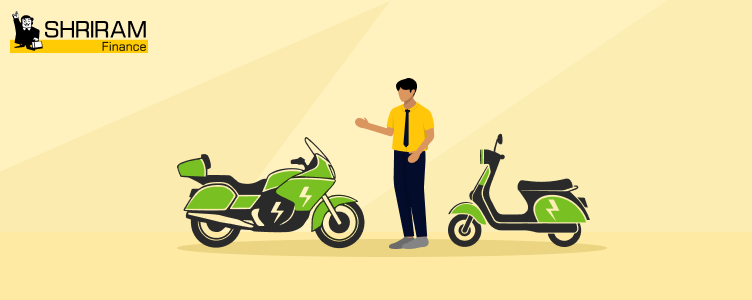
The rise of electric mobility is changing the way buyers generalize everyday travel in India. When one looks at electric vehicles there is often some choice and electric two-wheelers are often the most practical solution for the all-around soccer mom or person commuting to their regular job.
For many people, the EV bike range is an important consideration for the buyers and most times more than any other decision, will impact the user's purchasing decision. The main question always thought by the buyers is that how far the bike will go on a single charge and in real-world performance situations. This guide will take you through the options available and help you assess real performance in electric vehicles instead of manufacturers' specifications.
The availability of electric two-wheelers in the Indian market is progressing rapidly. Companies are investing a lot of money to increase the performance of batteries and develop efficiencies in their motors to provide better range. As a result, many of the best mileage electric bike models now offer daily usability on par with petrol-powered counterparts.
While the range provided by manufacturers is reliable to a degree, they often have large gaps between real daily experiences. Factors involved in effective driving performance, such as riding habits, traffic behaviour, road characteristics, and even weather, all affect real-world performance. On average, real average range is 20-30% worse than conventional testing methods state, and you need to conduct each practical assessment for yourself.
The Importance of Range in EV Ownership
A reliable EV bike range does impact the usability and dependability of an electric two-wheeler. Although petrol stations are plentiful, charging points for electric two-wheelers are not nearly as saturated, especially when leaving the larger cities. This makes the range of the bike a significant consideration for driver commuting through DV's tier-2 and tier-3 locations.
Range also affects how frequently a rider may charge their vehicle, spending less time at the charging station decreases battery wear, decreases costs on the electricity bill and makes every rider's routine easier. Range anxiety has been shown to be a large hurdle for drivers when they are looking to adopt electric vehicles entirely. If models can comfortably go beyond 100 km per charge, both new users and experienced users will feel satisfied with the vehicle.
Leading Long-Range Electric Bikes in India (2026)
Manufacturers have introduced a range of electric bikes designed to meet varying needs, from affordability to long-distance travel. The following models offer strong EV bike range and are well-suited for different use cases.
1. Ather 450X (4th Generation)
The Ather 450X continues to lead the premium electric scooter category with reliable range and a refined user experience. Tested under ideal conditions, it can reach up to 146 km per charge.
- Battery: 3.7 kWh lithium-ion
- Motor: 6.2 kW peak output
- Charging: 0–80% in 3.5 hours
- Features: Navigation, touchscreen display, OTA updates
In practical terms, riders can expect 110–120 km depending on terrain and usage. Regenerative braking improves efficiency, contributing up to 12% additional range. For riders prioritising efficiency, this remains one of the best mileage electric bike options in the market.
2.TVS iQube Electric ST
The iQube Electric ST addresses the need for consistent EV bike range without crossing into premium pricing. With a claimed range of 150 km, it performs competitively in real-world tests.
- Battery: 4.56 kWh (removable)
- Motor: 4.4 kW peak power
- Real-World Range: 115–130 km
- Charging: Home-compatible setup
TVS offers a practical solution for users who need reliable urban commuting range. The removable battery design allows for charging flexibility at home or office locations.
3.Bajaj Chetak Premium
Bajaj reintroduces the Chetak with a focus on durability and real-world usability. Though it retains a traditional design, its electric powertrain delivers strong EV bike range.
- Battery: 3.5 kWh
- Motor: 4.08 kW
- Claimed Range: 153 km
- Practical Range: 120–135 km
The strong steel body makes it ideal for riders seeking longevity. It consistently meets daily commuting needs and qualifies as a dependable best mileage electric bike for urban and semi-urban travel.
4.Ola S1 Pro (Gen 2)
The second generation of the Ola S1 Pro comes with refined systems and improved battery management. Claimed range reaches 195 km, though most users can expect around 140–160 km.
- Battery: 4.0 kWh
- Motor: 8.5 kW
- Charging: 0–80% in 4 hours
It balances power and EV bike range, offering an ideal solution for riders covering long daily routes. Over-the-air updates may continue to improve range and system performance.
5.Hero Vida V1 Pro
Hero’s V1 Pro offers a practical package aimed at the premium commuter. Claimed at 165 km, it reliably delivers 125–140 km under regular riding conditions.
- Battery: 3.94 kWh
- Motor: 6.0 kW
- Charging: Standard home charging compatible
The V1 Pro features effective thermal management, helping maintain range during high-temperature operation. For those focused on reliable city usage, this is another solid best mileage electric bike candidate.
6.Simple One
The Simple One leads in terms of range capacity among mainstream models. With a removable battery and a large 4.8 kWh unit, it suits long-range users.
- Battery: 4.8 kWh
- Motor: 8.5 kW
- Claimed Range: 236 km
- Practical Range: 170–190 km
Its efficient design makes it a standout for those prioritising EV bike range for extended travel. The removable battery system offers flexibility in charging scenarios.
7.Ultraviolette F77 Mach 2
Aimed at performance enthusiasts, the F77 Mach 2 blends sports bike performance with extended range capabilities.
- Battery: 10.3 kWh
- Motor: 27 kW
- Claimed Range: 323 km
- Real-World Range: 200–250 km
While performance modes consume more energy, eco settings make it one of the few options where range and speed coexist. It delivers impressive value in the best mileage electric bike bracket for sport-oriented riders.
Range, Battery, and Pricing Breakdown
Understanding the relationship between EV bike range, battery size, and price helps buyers identify the best value. Here’s how key models compare:
| Model | Battery (kWh) | Claimed Range (km) | Real Range (km) | Price (₹ Lakhs) | Range/₹ (km/L) |
| Ather 450X | 3.7 | 146 | 115–120 | 1.65 | 70–73 |
| TVS iQube ST | 4.56 | 150 | 115–130 | 1.55 | 74–84 |
| Bajaj Chetak | 3.5 | 153 | 120–135 | 1.47 | 82–92 |
| Ola S1 Pro | 4.0 | 195 | 140–160 | 1.40 | 100–114 |
| Hero Vida V1 Pro | 3.94 | 165 | 125–140 | 1.59 | 79–88 |
| Simple One | 4.8 | 236 | 170–190 | 1.30 | 131–146 |
| Ultraviolette F77 | 10.3 | 323 | 200–250 | 3.80 | 53–66 |
The Simple One provides the strongest range-per-price value among standard electric bikes. Although the F77 delivers a significantly higher EV bike range, it also comes at a premium price, targeting a different segment. Value-focused buyers should prioritise not just cost, but the utility they gain per kilometre based on their actual riding habits.
Use-Case Based Comparison
Understanding how EV bike range translates across different types of riders helps buyers find the right model for their routine. Here’s a breakdown by use-case scenario:
| Use Case | Daily Distance | Suggested Real-World Range | Recommended Models |
| City Commuting | 30–50 km | 100–120 km | TVS iQube ST, Bajaj Chetak |
| Suburban Travel | 50–80 km | 120–140 km | Ather 450X, Hero Vida V1 Pro |
| Long-Distance Riding | 80–120 km | 150–200+ km | Simple One, Ola S1 Pro |
| Performance Touring | 100+ km | 200+ km | Ultraviolette F77 |
This type of segmentation allows riders to align their buying decision with actual needs rather than defaulting to highest claimed range. Choosing based on use case also ensures that performance, comfort, and charging preferences are taken into account alongside EV bike range.
Charging Infrastructure in India
Access to reliable charging is an essential component in maximizing bike usability. There have been some large investments in charging infrastructure within cities. Still, rural and tier-2 cities are lagging behind. Public charging stations are increasing slowly but steadily, and for now home charging is the most convenient way. Companies like Ather, Ola and Hero are working on fast-charging to increase charging coverage and decrease charging time. Some state policies may incentivize private businesses to install chargers in their malls, offices or parking complexes.
Where public infrastructure remains limited, models with removable batteries (for instance, Simple One, TVS iQube ST) allow users to charge indoors or at their workplace adding to the flexibility of the electric bike. The convenience of charging will play a big role in choosing the best mileage electric bike from an implementation perspective.
First-Time EV Buyer Guide
If you're buying an electric bike for the first time, here are key factors to weigh:
- Assess Your Commute: Calculate your average daily distance and select a model that exceeds this by 30–40%.
- Check Charging Options: Ensure your residence has provisions for overnight charging.
- Set Realistic Expectations: Understand the difference between claimed and real-world range.
- Balance Budget and Value: Higher battery capacity comes at a cost but can reduce charging frequency.
- Test Ride Multiple Models: Assess comfort, handling, and range estimation displays before making a decision.
- Research Service Availability: Check the brand’s service network and warranty coverage.
- Plan for Battery Replacement: Know the expected battery life and cost of eventual replacement.
This checklist ensures your first EV purchase is informed, effective, and aligned with both lifestyle and expectations. Choosing the right model now can offer years of reliable, cost-effective travel.
What Affects EV Bike Range?
Range can be influenced by several factors:
Battery Characteristics: The larger the batteries, the bigger the range, although the chemistry and battery management systems will also come into play.
Motor Efficiency: Generally, with the mid-drive style motor that will be the most efficient.
Rider Habits: Habits like high rates of acceleration, high speeds, and constant braking all reduce the efficiency.
Terrain and Traffic: Hills, bad roads and heavy stop-and-go are all going to take a toll on the EV bike range.
Weather: Hot and cold can both aggravate battery performance.
Tire Conditions: Tires that are underinflated will resist more of the weight which is going to translate to reduced range.
Understanding these variables helps riders make better choices and maintain optimal performance.
Choosing the Best Mileage Electric Bike
When determining the right model, consider day-to-day travel needs, fast charging methods, and total ownership costs. Instead of relying on nameplate range, consider the actual distance the bike can travel between charges under your typical conditions.
For urban commuters traveling annually 40–80 km, a usable EV bike range of about 120–140 km is usually more than enough. For the riders requiring the additional capacity, especially without a charger every day, the premium options may be better suited.
It would be best if you also considered the total cost of ownership. Some models have features that support higher pricing by better efficiency, lower maintenance, and long battery life. Riders looking to get value, should always be considering not only the purchase price; but also ongoing savings from fuel and servicing.
Conclusion
The electric bike market in India is growing with models that now offer usable EV bike range for all types of users. From budget commuters to performance machines, the best mileage electric bike options today allow for the transition to electric to be feasible, practical and money saving.
With battery technology improving and infrastructure growing, range anxiety is reducing. However, you will still want to consider range subjectively and assess the intended model's actual performance level in the real world.
As India moves towards a greener transport sector, it is a good time now to make an informed decision so that it can be convenient daily and optimise a prudent buying decision for the future.
Electric bikes are no longer simply alternatives- they are fast becoming alternatives of choice for informed and environmentally conscientious consumers. Whether motoring on city streets or traversing open highways, understanding your EV bike range requirements will inform your choice of electric bike model that meets your needs for overall experience.
FAQs
What are the current average ranges for popular EV bikes in India?
Most electric bikes in India have an effective range of 100–150 km under typical city or suburban conditions. A select few higher-end models, such as the Ultraviolette F77 and Simple One, have the potential to exceed 200km on a single charge under optimum usage.
How does range vary with riding conditions?
EV bike range can fluctuate depending on riding speed, terrain, and traffic. Frequent braking, aggressive acceleration, and uphill climbs reduce efficiency. Smooth and consistent riding on flat roads maximises your range.
Are longer-range EV bikes more expensive?
Yes, models with extended range typically feature larger battery packs and more advanced systems, which raise manufacturing costs. However, many provide strong long-term value by reducing fuel and maintenance expenses.
How to maximise range on an electric bike?
Maintain proper tire pressure, ride at consistent speeds, avoid rapid acceleration, and use regenerative braking if available. Reducing load weight and charging your battery correctly also contribute to better range performance.
Enjoyed the Article? Share it with someone who might too!
- Share Via


 Previous Article
Popular Tags
Recent Articles
EV Bike Range Comparison 2026: Complete Guide to Electric Bike Mileage in India

Best Royal Enfield Bikes for Touring
Hero Vs Honda-How to Decide What Fits Your Needs
Top Bikes for Couples or Pillion Comfort

Top 10 Scooters with Best Mileage in India - 2026
Top Adventure Bikes for Long Rides

Bike Number Plate Rules in India 2026 Guide
Cheapest Bikes with Disc Brakes Front and Rear

Top Lightweight Bikes for Easy Manoeuverability and City Riding

Bikes That Can Handle Flooded Roads in Indian Cities